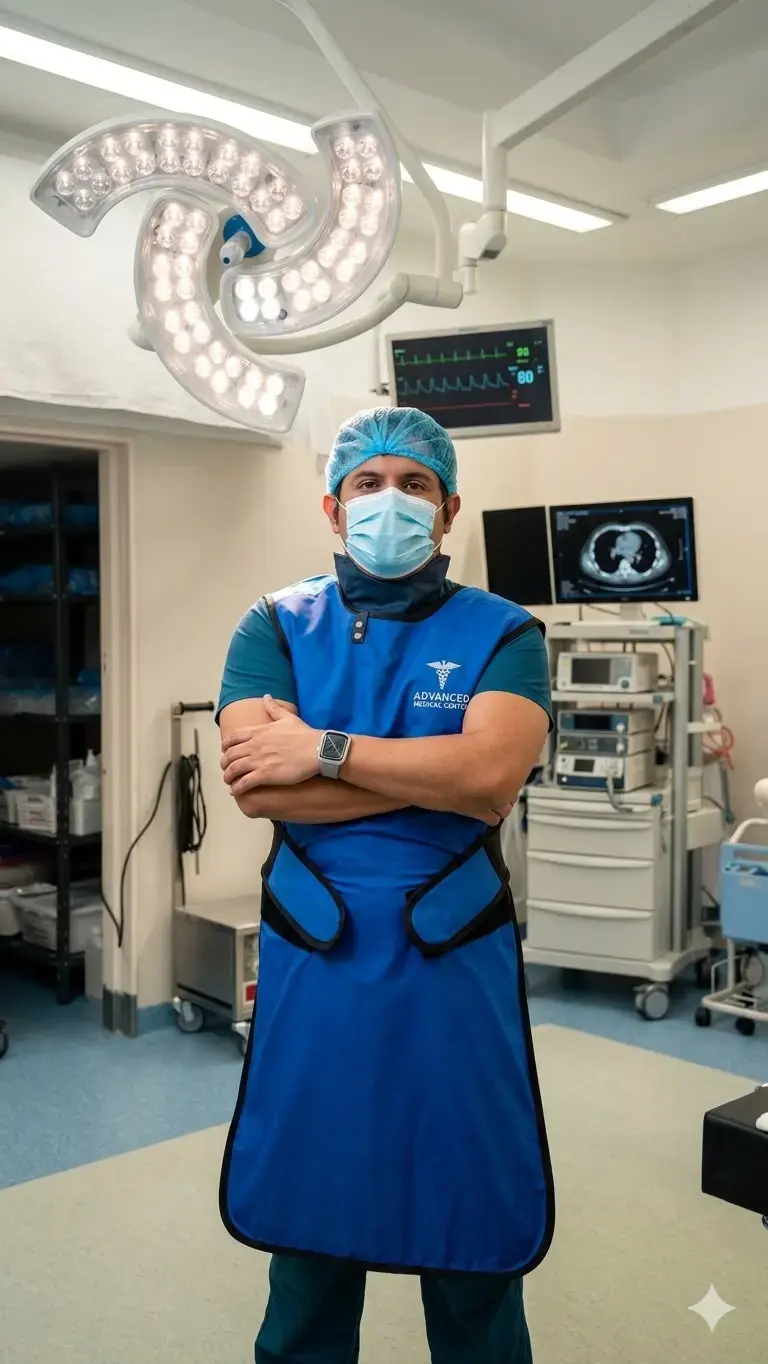
InvestigaciónBuenos Aires · Fecha por confirmar
Observership en cirugía percutánea · Fundación DAICIM
Entrada 02Ficha pendiente
 Dr. Victor Serna Alarcón
Cohorte prospectiva en 1377 hospitales de 112 países: cuanto más tarda el paciente con apendicitis en llegar a la evaluación quirúrgica, mayor es el riesgo de perforación.
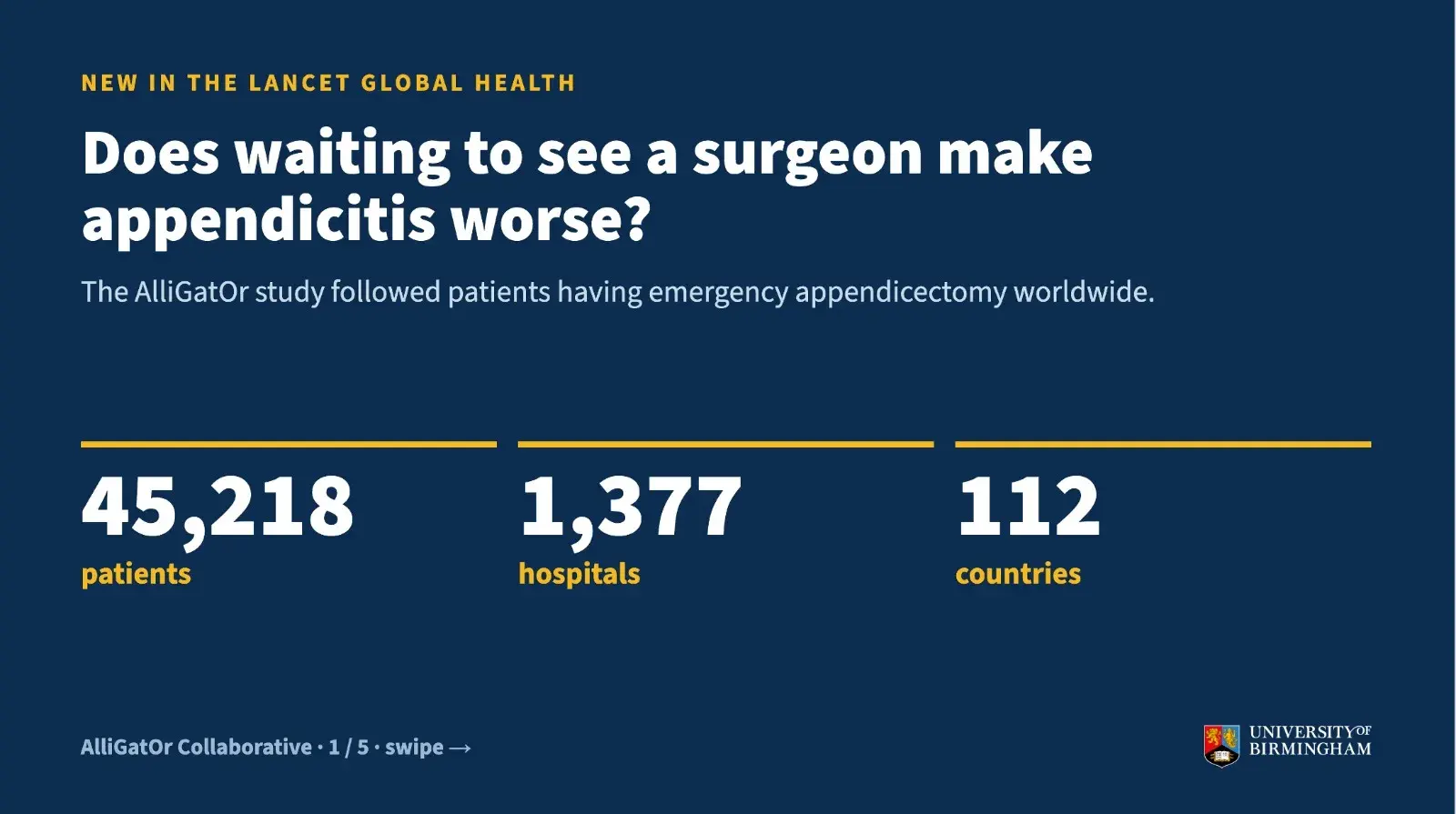
Estudio internacional, prospectivo y observacional sobre 45 218 pacientes operados de apendicitis aguda en 112 países. Su conclusión respalda que la evaluación quirúrgica se haga dentro de las primeras 24 horas para reducir la apendicitis perforada. Abajo, el texto completo en inglés, tal como fue publicado.
Background Acute appendicitis is the most common surgical emergency worldwide. Concern that delayed treatment might increase perforation can lead to unnecessary surgery and high rates of negative appendicectomy, where a normal, non-inflamed appendix is removed. However, whether perforation is related to pre-hospital time (symptom onset to first surgical assessment) has not been explored in contemporary global data.
Methods We conducted an international, multicentre, prospective, observational cohort study (AlliGatOr) of patients undergoing emergency appendicectomy for suspected acute appendicitis in 1377 hospitals across 112 countries. We included all consecutive eligible patients and excluded patients undergoing appendicectomy for indications other than suspected acute appendicitis. Each participating hospital entered data from medical records prospectively into the Research Electronic Data Capture platform. The primary outcome was perforation and the primary exposure was pre-hospital time (categorised as <12 h, 12–23 h, 24–47 h, 48–71 h, and ≥72 h). Follow-up was for 30 days after surgery to assess postoperative outcomes. In-hospital time (first surgical assessment to skin incision) was a key secondary exposure. We estimated adjusted risk ratios (aRRs) using multilevel Poisson regression. Multivariable analyses used complete cases; missing data were not imputed. The study is registered with ClinicalTrials.gov (NCT06774001) and is completed.
Findings Between Feb 3 and May 25, 2025, we enrolled 45 218 patients with a median age of 27 years (IQR 18–41); 25 218 (55⋅8%) were male and 19 996 (44⋅2%) were female. 42 317 patients were included in the primary analysis, of whom 13 560 (32⋅0%) had perforation. The adjusted primary model included 41 740 patients with complete covariate data. Access to CT imaging varied across income groups: 12 232 (58⋅6%) of 20 861 patients in high-income countries, 4597 (37⋅1%) of 12 388 in upper-middle-income countries, 1769 (19⋅2%) of 9192 in lower-middle-income countries, and 156 (5⋅6%) of 2769 in low-income countries. Minimally invasive surgery was used in 19 985 (95⋅8%) of 20 861 patients, 6817 (55⋅0%) of 12 390, 2613 (28⋅4%) of 9195, and 203 (7⋅3%) of 2770, respectively. Perforation increased with pre-hospital times, from 2629 (22⋅9%) of 11 487 patients at less than 12 h (reference) to 2671 (25⋅8%) of 10 371 at 12–23 h (aRR 1⋅07 [95% CI 1⋅01–1⋅13]; p=0⋅021), 2969 (33⋅6%) of 8826 at 24–47 h (1⋅36 [1⋅28–1⋅44]; p<0⋅0001), 1933 (41⋅7%) of 4640 at 48–71 h (1⋅62 [1⋅52–1⋅72]; p<0⋅0001), and 3350 (48⋅0%) of 6974 at pre-hospital times of at least 72 h (1⋅85 [1⋅75–1⋅95]; p<0⋅0001). Longer in-hospital time was associated with lower perforation risk: versus less than 12 h, aRRs were 0⋅95 (95% CI 0⋅91–1⋅00; p=0⋅034) for 12–23 h, 0⋅87 (0⋅82–0⋅93; p<0⋅0001) for 24–47 h, and 0⋅82 (0⋅75–0⋅90; p<0⋅0001) for at least 48 h. Perforation was associated with higher complication risk at 30 days (2⋅36 [2⋅24–2⋅48]; p<0⋅0001). Complications were also higher after open surgery than for minimally invasive surgery (1⋅30 [1⋅20–1⋅41]; p<0⋅0001). Negative appendicectomy occurred in 2365 (5⋅2%) of 45 218 patients and was lower among those who had preoperative CT than among those who did not (0⋅69 [0⋅62–0⋅77]; p<0⋅0001).
Interpretation These findings support prioritising surgical assessment within 24 h as a target to reduce the burden of perforated appendicitis. Preoperative CT imaging was associated with lower rates of unnecessary operations; access to CT and minimally invasive surgery varied markedly by country income group.
Funding National Institute for Health and Care Research.
Copyright © 2026 The Author(s). Published by Elsevier Ltd. This is an open access article under the CC BY license (http://creativecommons.org/licenses/by/4.0/).
Acute appendicitis is the most common abdominal surgical emergency worldwide.1–4 Perforation complicates around a third of cases and has been described as an indicator for quality of access to emergency surgical care.5–7 Perforation is associated with longer antibiotic use, prolonged hospital stay, higher costs, and potentially long-term reproductive sequelae in young women.8–10 Acute appendicitis is commonly managed as a time-sensitive condition, with the expectation that earlier diagnosis and treatment can reduce progression to perforation and life-threatening sepsis.11 However, whether perforation is truly time-dependent remains controversial.
Traditionally, perforation has been viewed as a consequence of delayed diagnosis and surgery, but the empirical basis for a simple time–perforation relationship is limited. An alternative hypothesis proposes that perforated and non-perforated appendicitis might, in part, represent distinct disease pathways, with some patients predisposed to rapid progression to perforation.12 This hypothesis has not been tested with contemporary, international, prospective data.
Recent research has focused on non-operative antibiotic treatment,13–15 but appendicectomy remains the dominant treatment strategy globally.8,9,16 Increasing use of imaging and more selective management can introduce delays for patients who require urgent surgery.13,17,18
The interplay between pre-hospital time, in-hospital time, access to imaging, and perforation risk remains unmeasured on a global scale. Most studies examining time and perforation are single-country cohorts from high-income settings and do not reliably separate pre-hospital from in-hospital delay.11,19 More granular data are needed to understand where delays arise along the care pathway, and how diagnostic and operative resources modify risk.
The primary aim of this study was to determine the association between pre-hospital time and perforation. Secondary aims were to examine whether in-hospital time was associated with perforation; to quantify the association between perforation and 30-day postoperative complications; and to describe global variation in access to CT and minimally invasive surgery, including the association between preoperative CT and negative appendicectomy.
We conducted an international, multicentre, prospective, observational cohort study (Appendicitis Global Outcomes [AlliGatOr]) of patients undergoing emergency appendicectomy for suspected acute appendicitis. The study was open to any hospital performing emergency appendicectomy. Invitations were disseminated through established collaborative, professional, and regional networks, and hospitals self-selected to participate. Overall, 1377 hospitals in 112 countries contributed patients (appendix 1 pp 4–55). Each hospital collected data for at least one of eight prespecified 14-day inclusion periods between Feb 3 and May 25, 2025. These periods were set by the central coordinating team to span the study period, and participating hospitals selected which period or periods to join from this prespecified schedule. To minimise selection bias, all consecutive eligible patients were included. Exclusion criteria were appendicectomy for indications other than suspected acute appendicitis, appendicectomy performed as part of another procedure, and re-operation for stump appendicitis.
This study was observational, with no changes to patient pathways. Only routine, anonymised data were collected. In the UK, the study was registered at each site as either a clinical audit or service evaluation. At the lead institution, the University of Birmingham (Birmingham, UK), the study received approval from the Science, Technology, Engineering and Mathematics Research Ethics Committee (reference ERN_3201-Oct2024). In other countries, local principal investigators obtained the relevant national or institutional ethics approvals, waivers, or service evaluation registrations, and data protection approvals where required. Informed patient consent was obtained unless the need for this was waived by the local research ethics committee or institutional review board.
The protocol was published a priori, and study materials and case report forms are available online in multiple languages.20,21 The study is registered with ClinicalTrials.gov (NCT06774001) and is completed. We report prioritised primary outcomes from a group of key performance measures in the published protocol, selected a priori for clinical relevance across income settings; our report is in line with STROBE guidelines.20,22
Each participating hospital formed a local team responsible for screening, data collection, and 30-day follow-up. Teams entered data prospectively into the Research Electronic Data Capture platform, hosted at the University of Birmingham.23 Definitions for key study variables, including perforation status, were prespecified in the published protocol and study data guide, available in multiple languages, and reinforced through regular collaborator webinars during the study period.
Patient-level data included age, sex, American Society of Anaesthesiologists (ASA) physical status, pre-hospital time, in-hospital time, preoperative imaging modality used (ultrasound, CT scan, or MRI scan), planned operative approach, presence of faecolith (on imaging, intraoperative, or histopathology), and 2025 World Bank country income group (high income, upper-middle income, lower-middle income, and low income).24 Age and sex were obtained from routinely collected medical records based on local documentation practices. Sex was recorded on the study case-report form as female or male; no additional study-specific demographic information was collected directly from patients.
Pre-hospital time was defined as time from symptom onset to first surgical assessment and collected as a categorical variable (<12 h, 12–23 h, 24–47 h, 48–71 h, ≥72 h) to minimise recall and recording error. In-hospital time was defined as time from first surgical assessment to skin incision (<12 h, 12–23 h, 24–47 h, ≥48 h). Operative approach was classified as the planned approach at skin incision; procedures converted from minimally invasive to open were categorised as minimally invasive.
Hospital-level data were collected via a structured survey capturing hospital level, funding type, adult or paediatric case-mix, and availability of imaging and minimally invasive surgery. These data allowed comparison of hospital resources and contextual interpretation of outcomes across settings.
Data completeness and internal validity checks were performed centrally throughout the study period. When key variables were missing or implausible, queries were returned to collaborators and hospital leads to review the record from source and correct it before database lock. Missingness was assessed and reported (appendix 1 p 59). Imputation was not planned because missing data rates were anticipated to be low. Multivariable models used complete cases for prespecified covariates. This data capture and validation methodology has been used and validated in previous prospective cohort studies.25,26
The primary outcome was perforation, and the primary exposure was pre-hospital time. Perforation was defined as histopathological evidence of perforation, gangrene, or abscess. When histopathology was unavailable, macroscopic intraoperative findings of perforation, gangrene, or abscess were used. Secondary clinical outcomes included negative appendicectomy, any postoperative complication within 30 days, and major postoperative complications within 30 days. Negative appendicectomy was defined as a histologically normal appendix or macroscopically normal appendix when histopathology was unavailable. Postoperative complications were classified with the Clavien–Dindo system;27 grades I–V were included as any complication, grades I–II were classified as minor complications, and grades III–V as major complications. Additional prespecified postoperative outcomes included surgical site infection, reoperation, readmission within 30 days, postoperative length of stay, calculated as the number of days from operation to discharge, and mortality, corresponding to Clavien–Dindo grade V (appendix 1 pp 56–57). Preoperative CT use and planned operative approach were examined as exposures in secondary analyses of negative appendicectomy and postoperative complications, respectively. Preoperative CT use, minimally invasive surgery, and histopathology availability were also described across country income groups.
With a sample size of 14 000 patients, primary and secondary binary outcomes with expected incidences between 12⋅8% and 30⋅0% can be estimated with 95% CIs of approximately 1⋅1–1⋅5 percentage points (appendix 1 p 60). Based on previous cohort studies, we estimated that at least 500 hospitals would participate globally.3,28 Assuming an average of one appendicectomy per day and two 14-day data collection windows per hospital, at least 14 000 patients could be enrolled.
Analyses were conducted on prespecified analysis populations according to outcome. Descriptive summaries included all eligible patients undergoing emergency appendicectomy. The primary perforation analysis was restricted to patients with appendicitis (perforated or non-perforated), defined by histopathology, or macroscopic assessment if histopathology was unavailable. Negative appendicectomy and other non-appendicitis pathology were excluded from the primary analysis. For the secondary analyses of negative appendicectomy rates and complication rates, all patients who underwent surgery were included.
Continuous data were presented as mean (SD) if normally distributed or median (IQR) if skewed. Categorical variables were summarised as numbers and percentages. Descriptive summaries were stratified primarily by pre-hospital time, with supplementary stratification by World Bank country income group, perforation status, and complication status.
All multivariable analyses used a multilevel Poisson framework with a log link and hospital-level random intercepts; this framework was applied consistently to each outcome variable (perforation in the primary analysis; negative appendicectomy and 30-day postoperative complications in the secondary analyses). This approach provided directly interpretable adjusted risk ratios (aRRs) and avoided overestimation that can occur when odds ratios from logistic regression are reported for common outcomes.29 aRRs were obtained by exponentiating fixed-effect coefficients, and 95% CIs were model-based Wald intervals derived from the estimated standard errors of the fitted mixed model.30,31 Country-level context was captured by inclusion of World Bank country income group as a fixed effect; additional country-level random effects were not specified because many countries contributed few hospitals, limiting stable estimation. Covariates were prespecified based on established predictors in the published literature and clinical plausibility as agreed by the writing group.32–35
The primary analysis evaluated the association between pre-hospital time categories and perforation, reporting aRRs. The multivariable perforation model adjusted for age group, sex, ASA grade, faecolith presence, in-hospital time, and country income group. We additionally estimated adjusted absolute risks and risk differences using model-based standardisation (appendix 1 p 58).
Table 1: Baseline, preoperative, and intraoperative characteristics by pre-hospital time
| Pre-hospital time | ||||||
|---|---|---|---|---|---|---|
| <12 h (n=12 239) | 12–23 h (n=10 995) | 24–47 h (n=9355) | 48–71 h (n=4951) | ≥72h (n=7650) | Total (N=45 190)* | |
| Age | ||||||
| Median, years (IQR) | 26 (18–38) | 27 (18–40) | 28 (18–42) | 29 (17–44) | 29 (17–46) | 27 (18–41) |
| <16 years | 2248 (18⋅4%) | 2088 (19⋅0%) | 1848 (19⋅8%) | 1034 (20⋅9%) | 1620 (21⋅2%) | 8838 (19⋅6%) |
| 16–45 years | 8039 (65⋅7%) | 6917 (62⋅9%) | 5551 (59⋅3%) | 2758 (55⋅7%) | 4065 (53⋅1%) | 27 330 (60⋅5%) |
| >45 years | 1949 (15⋅9%) | 1987 (18⋅1%) | 1955 (20⋅9%) | 1159 (23⋅4%) | 1965 (25⋅7%) | 9015 (19⋅9%) |
| Missing | 3 | 3 | 1 | 0 | 0 | 7 |
| Sex | ||||||
| Female | 5408 (44⋅2%) | 4830 (43⋅9%) | 3983 (42⋅6%) | 2182 (44⋅1%) | 3582 (46⋅8%) | 19 985 (44⋅2%) |
| Male | 6830 (55⋅8%) | 6164 (56⋅1%) | 5372 (57⋅4%) | 2769 (55⋅9%) | 4068 (53⋅2%) | 25 203 (55⋅8%) |
| Pregnant† | ||||||
| No | 3765/3890 (96⋅8%) | 3248/3383 (96⋅0%) | 2534/2595 (97⋅6%) | 1317/1354 (97⋅3%) | 2052/2119 (96⋅8%) | 12 916/13 341 (96⋅8%) |
| Yes | 125/3890 (3⋅2%) | 135/3383 (4⋅0%) | 61/2595 (2⋅4%) | 37/1354 (2⋅7%) | 67/2119 (3⋅2%) | 425/13 341 (3⋅2%) |
| American Society of Anaesthesiologists physical status grade | ||||||
| I–II | 11 564 (94⋅5%) | 10 417 (94⋅7%) | 8804 (94⋅1%) | 4608 (93⋅1%) | 6931 (90⋅6%) | 42 324 (93⋅7%) |
| III–V | 659 (5⋅4%) | 563 (5⋅1%) | 537 (5⋅7%) | 337 (6⋅8%) | 713 (9⋅3%) | 2809 (6⋅2%) |
| Missing | 16 | 15 | 14 | 6 | 6 | 57 |
| Preoperative CT scan use | ||||||
| No | 7415 (60⋅6%) | 6575 (59⋅8%) | 5409 (57⋅8%) | 2828 (57⋅1%) | 4209 (55⋅0%) | 26 436 (58⋅5%) |
| Yes | 4823 (39⋅4%) | 4420 (40⋅2%) | 3946 (42⋅2%) | 2123 (42⋅9%) | 3440 (45⋅0%) | 18 752 (41⋅5%) |
| Missing | 1 | 0 | 0 | 0 | 1 | 2 |
| Country income | ||||||
| High | 5184 (42⋅4%) | 5324 (48⋅4%) | 4520 (48⋅3%) | 2403 (48⋅5%) | 3428 (44⋅8%) | 20 859 (46⋅2%) |
| Upper middle | 3418 (27⋅9%) | 2935 (26⋅7%) | 2603 (27⋅8%) | 1414 (28⋅6%) | 2014 (26⋅3%) | 12 384 (27⋅4%) |
| Lower middle | 2791 (22⋅8%) | 1936 (17⋅6%) | 1699 (18⋅2%) | 937 (18⋅9%) | 1815 (23⋅7%) | 9178 (20⋅3%) |
| Low | 846 (6⋅9%) | 800 (7⋅3%) | 533 (5⋅7%) | 197 (4⋅0%) | 393 (5⋅1%) | 2769 (6⋅1%) |
Data are n or n (%), unless stated otherwise. *28 patients with missing pre-hospital time are excluded from this table, which is stratified by the exposure variable; these 28 are included in all analyses not requiring pre-hospital time. †Denominator is all female patients of reproductive age (15–49 years).
Secondary analyses were prespecified and are reported in three parts. First, we described preoperative imaging use, planned operative approach, and histopathology availability across income groups. Second, we examined the association between preoperative CT imaging and negative appendicectomy, adjusting for age group, sex, previous abdominal surgery, pre-hospital time, and income group. Previous abdominal surgery was included a priori as a marker of diagnostic complexity that might influence imaging use and diagnostic accuracy. Finally, we assessed the association between perforation and overall postoperative complications. In this analysis, perforation—the primary outcome of the main analysis—was modelled as an exposure because perforation status is established intraoperatively and therefore temporally precedes 30-day postoperative complications. The model adjusted for age group, sex, ASA grade, pre-hospital time, in-hospital time, operative approach, and income group.
Prespecified subgroup analyses for the primary perforation model were performed for children (<16 years), women of reproductive age (16–49 years), and by country income group (high income, upper middle income, lower middle income, and lower income). The primary model was refitted within each stratum using the same covariate set, and stratum-specific adjusted risk ratios were generated.
Sensitivity analyses were prespecified to assess robustness of the primary perforation analysis to data availability and outcome definition by repeating the primary model restricted to patients with histopathology available.
All analyses were performed with R (version 4.0.2). Multilevel Poisson models were fitted with the glmmTMB package (version 1.1.13).
The funder of the study had no role in study design, data collection, data analysis, data interpretation, or writing of the report.
We enrolled 45 218 patients from 1377 hospitals in 112 countries (figure 1). Of the enrolled patients, 45 190 had data for pre-hospital time; 28 had missing pre-hospital time data and were excluded from analyses that were stratified by this variable. The primary perforation analysis excluded 2365 patients with a normal appendix, 533 with non-appendicitis pathology, and three with missing perforation status, giving a primary analysis population of 42 317. Hospital-level data were available for 1257 (91⋅6%) of 1377 hospitals (appendix 1 pp 61).
Table 2: Clinical outcomes according to perforation status
| Non-perforated (n=28 757) | Perforated (n=13 560) | Total (N=42 317)* | |
|---|---|---|---|
| Surgical site infection | |||
| No | 27 654 (96⋅2%) | 11 965 (88⋅2%) | 39 619 (93⋅6%) |
| Yes | 822 (2⋅9%) | 1454 (10⋅7%) | 2276 (5⋅4%) |
| Missing | 281 | 141 | 422 |
| Reoperation | |||
| No | 28 292 (98⋅4%) | 13 014 (96⋅0%) | 41 306 (97⋅6%) |
| Yes | 183 (0⋅6%) | 404 (3⋅0%) | 587 (1⋅4%) |
| Missing | 282 | 142 | 424 |
| Postoperative length of stay | |||
| Mean, days (SD) | 2⋅0 (2⋅2) | 4⋅3 (4⋅2) | 2⋅7 (3⋅2) |
| Clavien–Dindo grade | |||
| No complications | 25 252 (87⋅8%) | 9616 (70⋅9%) | 34 868 (82⋅4%) |
| Minor complications | 2717 (9⋅4%) | 2990 (22⋅1%) | 5707 (13⋅5%) |
| Major complications | 498 (1⋅7%) | 804 (5⋅9%) | 1302 (3⋅1%) |
| Missing | 290 | 150 | 440 |
| Clavien–Dindo Grade V | 16 (0⋅1%) | 44 (0⋅3%) | 60 (0⋅1%) |
| Readmission | |||
| No | 27 795 (96⋅7%) | 12 644 (93⋅2%) | 40 439 (95⋅6%) |
| Yes | 672 (2⋅3%) | 769 (5⋅7%) | 1441 (3⋅4%) |
| Missing | 290 | 147 | 437 |
Data are n or n (%), unless otherwise stated. Missing data are shown and were excluded from hypothesis testing. *2365 patients with normal appendix, 533 with non-appendicitis pathology, and three with missing perforation status were excluded.
Of the patients enrolled, 25 218 (55⋅8%) were male, 19 996 (44⋅2%) were female, and the median age was 27 years (IQR 18–41). Among the 45 190 patients with available pre-hospital time, 42 324 (93⋅7%) had ASA grade I–II. Pre-hospital time distributions were similar across income groups (table 1, figure 2, appendix 1 p 84). Most participating centres were government-funded tertiary referral hospitals providing care for both adults and children (appendix 1 p 61).
Overall, 13 560 (32⋅0%) of 42 317 patients had perforation. 30-day postoperative outcome data were available for at least 44 752 (99⋅0%) of 45 218 patients for each of overall complications, surgical-site infection, reoperation, and readmission. Within 30 days, 7520 (16⋅8%) of 44 752 patients had at least one postoperative complication and 2365 (5⋅2%) of 45 218 patients had a negative appendicectomy (figure 1, appendix 1 pp 62–65). Reoperation, surgical site infection, and readmission were more common after perforated than non-perforated appendicitis (table 2). Mean postoperative length of stay was 2⋅7 days (SD 3⋅1) and was longer after perforated than non-perforated appendicitis and in patients with complications than in those without complications (table 2; appendix 1 pp 62–63, 66–67). Death within 30 days was more common after perforated than non-perforated appendicitis (44 [0⋅3%] vs 16 [0⋅1%]); given the rarity of these events, mortality was not further stratified by pre-hospital time (table 2).
Table 3: Associations between patient, disease, and system factors and risk of perforation
| Crude risk ratio (95% CI) | Adjusted risk ratio (95% CI) | p-value | |
|---|---|---|---|
| Pre-hospital time, h | |||
| <12 | Reference | Reference | ⋅⋅ |
| 12–23 | 1⋅12 (1⋅06–1⋅19) | 1⋅07 (1⋅01–1⋅13) | 0⋅021 |
| 24–47 | 1⋅47 (1⋅40–1⋅55) | 1⋅36 (1⋅28–1⋅44) | <0⋅0001 |
| 48–71 | 1⋅81 (1⋅71–1⋅92) | 1⋅62 (1⋅52–1⋅72) | <0⋅0001 |
| ≥72 | 2⋅10 (1⋅99–2⋅21) | 1⋅85 (1⋅75–1⋅95) | <0⋅0001 |
| Age group, years | |||
| <16 | Reference | Reference | ⋅⋅ |
| 16–45 | 0⋅77 (0⋅74–0⋅81) | 0⋅86 (0⋅82–0⋅91) | <0⋅0001 |
| >45 | 1⋅30 (1⋅24–1⋅36) | 1⋅31 (1⋅24–1⋅39) | <0⋅0001 |
| Sex | |||
| Female | Reference | Reference | ⋅⋅ |
| Male | 1⋅19 (1⋅15–1⋅23) | 1⋅18 (1⋅14–1⋅23) | <0⋅0001 |
| ASA grade | |||
| I–II | Reference | Reference | ⋅⋅ |
| III–V | 1⋅59 (1⋅50–1⋅69) | 1⋅27 (1⋅19–1⋅35) | <0⋅0001 |
| Faecolith | |||
| No | Reference | Reference | ⋅⋅ |
| Yes | 1⋅67 (1⋅61–1⋅74) | 1⋅66 (1⋅60–1⋅73) | <0⋅0001 |
| In-hospital time, h | |||
| <12 | Reference | Reference | ⋅⋅ |
| 12–23 | 0⋅99 (0⋅95–1⋅03) | 0⋅95 (0⋅91–1⋅00) | 0⋅034 |
| 24–47 | 0⋅99 (0⋅93–1⋅05) | 0⋅87 (0⋅82–0⋅93) | <0⋅0001 |
| ≥48 | 1⋅04 (0⋅95–1⋅14) | 0⋅82 (0⋅75–0⋅90) | <0⋅0001 |
| Income group | |||
| High | Reference | Reference | ⋅⋅ |
| Low | 1⋅21 (1⋅13–1⋅30) | 1⋅29 (1⋅14–1⋅45) | <0⋅0001 |
| Lower middle | 1⋅03 (0⋅98–1⋅08) | 1⋅00 (0⋅92–1⋅10) | 0⋅91 |
| Upper middle | 1⋅16 (1⋅12–1⋅21) | 1⋅04 (0⋅96–1⋅13) | 0⋅28 |
Crude risk ratios were estimated with univariable Poisson regression with a log link. Adjusted risk ratios (aRRs) were estimated with multilevel (mixed-effects) Poisson regression with a log link and a hospital-level random intercept. aRRs are exponentiated fixed-effect coefficients, conditional on hospital-level random effects and 95% CIs are Wald intervals derived from the mixed model standard errors. p values correspond to adjusted estimates.
Overall, perforation occurred in 2629 (22⋅9%) of 11 487 patients with pre-hospital time less than 12 h, rising progressively to 2671 (25⋅8%) of 10 371 at 12–23 h, 2969 (33⋅6%) of 8826 at 24–47 h, 1933 (41⋅7%) of 4640 at 48–71 h, and 3350 (48⋅0%) of 6974 with pre-hospital time of at least 72 h (figure 2, appendix 1 p 68). After adjustment for patient-level covariates and country income group, and accounting for hospital-level random effects, longer pre-hospital times were associated with a dose–response increase in perforation risk compared with a pre-hospital time of less than 12 h (table 3, appendix 1 pp 69, 85–86). Perforation was more likely in older patients (>45 years vs <16 years), male sex versus female sex, those with ASA grade III–V versus grade I–II, those with faecolith versus those without, and patients in low-income countries compared with patients in high-income countries (table 3, appendix 1 pp 85–86).
In-hospital time was associated with lower perforation risk. Compared with surgery within 12 h, adjusted risk ratios were 0⋅95 (95% CI 0⋅91–1⋅00; p=0⋅034) for 12–23 h, 0⋅87 (0⋅82–0⋅93; p<0⋅0001) for 24–47 h, and 0⋅82 (0⋅75–0⋅90; p<0⋅0001) for at least 48 h (table 3; appendix 1 pp 85–86). Adjusted absolute risks and risk differences are reported in the appendix (appendix 1 p 69). The intraclass correlation coefficient for the primary perforation model was 0⋅115 (appendix 1 p 80).
With regard to secondary outcomes, we first examined differences in diagnostic and operative capacity across income groups. Ultrasound was the most commonly used imaging modality worldwide. CT imaging showed a marked income gradient from 58⋅6% in high-income countries to 5⋅6% in low-income countries (figure 3, appendix 1 pp 62–67, 81, 88). Planned minimally invasive approach similarly declined with decreasing income group (95⋅8% in high-income countries to 7⋅3% in low-income countries). Histopathology availability was similarly lower in low-income countries and lower-middle-income countries than in high-income and upper-middle-income countries (appendix 1 pp 62–64, 89).
Second, using adjusted multilevel models, we identified an association between preoperative CT imaging and a lower risk of negative appendicectomy compared with no CT (aRR 0⋅69 [95% CI 0⋅62–0⋅77]; p<0⋅0001). Compared with a pre-hospital time of less than 12 h, a delay of at least 72 h was associated with higher negative appendicectomy (1⋅45 [95% CI 1⋅28–1⋅64]; p<0⋅0001), whereas shorter pre-hospital time categories were not. Negative appendicectomy was less frequent in patients aged >45 years than in children less than 16 years of age (0⋅57 [95% CI 0⋅48–0⋅68]; p<0⋅0001), and in male patients than in female patients (0⋅67 [95% CI 0⋅61–0⋅72]; p<0⋅0001). Compared with high-income countries, negative appendicectomy was less frequent in lower-middle-income countries (0⋅60 [95% CI 0⋅48–0⋅76]; p<0⋅0001) but was not different in upper-middle-income or low-income countries. Previous abdominal surgery was not associated with negative appendicectomy (appendix 1 p 90).
Finally, we evaluated the association between perforation and postoperative complications using adjusted multilevel models. Postoperative complications were more common after perforated than non-perforated appendicitis (table 2). In adjusted analysis, perforation was associated with more than two-fold higher risk of any 30-day complication (aRR 2⋅36 [95% CI 2⋅24–2⋅48]; p<0⋅0001). Open surgery was associated with higher complication risk than minimally invasive surgery (1⋅30 [1⋅20–1⋅41]; p<0⋅0001). Pre-hospital time of at least 72 h was associated with higher complication risk (1⋅32 [1⋅22–1⋅42]; p<0⋅0001), with a smaller increase at 48–71 h (1⋅13 [1⋅04–1⋅24]; p=0⋅0058). Age older than 45 years and ASA grade III–V were also associated with higher complication risk, whereas sex and country income group were not associated. In-hospital time was not clearly associated with complication risk. Major complications (Clavien–Dindo III–V) showed the same direction of association and are reported in appendix 1 (pp 91–93).
In subgroup analyses, the association between longer pre-hospital time and perforation was consistent in prespecified analyses of children, women aged 16–49 years, and across income groups, although the magnitude varied between strata (appendix 1 pp 71–78).
Finally, we assessed the robustness of the primary perforation analysis to outcome definition and data availability. Findings were consistent in sensitivity analyses restricted to patients with histopathology available (appendix 1 p 79). Missing data were low for key variables (appendix 1 p 59).
This global, prospective cohort study found that longer pre-hospital time is associated with a dose–response increase in perforation risk after emergency appendicectomy, consistent across prespecified patient and country income subgroups. There is biological heterogeneity between patients, with perforation occurring within 12 h in some patients and not occurring at all in others despite a pre-hospital time of at least 72 h, which is consistent with the hypothesis that perforated and non-perforated appendicitis might, in part, represent distinct biological pathways. However, the graded increase across ordered pre-hospital time categories supports a time-dependent mechanism in some patients. This association is clinically important because perforation was associated with more than a two-fold higher risk of complications, longer hospital stays, and more frequent reoperation. As we cannot predict at presentation which patients are at risk of progression to perforation, patients with suspected appendicitis should always be treated as being at risk. Reducing preventable perforation therefore offers a key opportunity to lessen downstream patient harm, resource use, and financial burden.36,37
Several secondary findings add clinical and health system context. Longer in-hospital time was associated with perforation risk in the direction of apparent benefit, but this outcome most likely reflects confounding by severity at presentation: patients with probable or definite perforation based on clinical findings, physiology, or imaging are expedited directly to surgery, whereas patients undergoing further diagnostic tests or observation are selectively those with lower underlying perforation risk.38,39 We observed steep income gradients in access to CT and minimally invasive surgery, highlighting persistent inequities in diagnosis and treatment. The higher adjusted perforation risk in low-income countries, despite similar crude pre-hospital time distributions, is likely explained by referral centre case-mix, because most hospitals in low-income countries in this study were government-funded tertiary referral centres receiving patients after multiple referral steps with progressive disease. Perforation ascertainment in low-income countries also relied predominantly on macroscopic intraoperative assessment, which might have introduced differential misclassification relative to histopathological ascertainment. These structural inequities likely compound perforation risk beyond that which can be explained by pre-hospital time alone.40,41
Preoperative CT use was associated with a lower risk of negative appendicectomy. The higher negative appendicectomy rate with pre-hospital times of at least 72 h likely reflects greater diagnostic uncertainty among late presenters, with observation being used as part of the diagnostic process.42 The low overall negative appendicectomy rate compared with many series likely reflects greater CT use and differences in study definitions.42–44 Open surgery was associated with higher 30-day complication risk than planned minimally invasive surgery, although this association should be interpreted cautiously because operative approach reflects disease severity, surgeon expertise, and resource constraints.41
Taken together, these findings support prioritising earlier surgical assessment and more selective use of preoperative CT imaging when diagnostic uncertainty persists, with recommendations informed by local infrastructure capacity and cost-effectiveness analysis.45
This large, prospective cohort with consecutive global enrolment across diverse health systems, high follow-up completeness, and prespecified multilevel modelling strengthens inference and generalisability. However, several limitations should be considered. First, pre-hospital and in-hospital times were collected categorically, and pre-hospital time was patient-reported, introducing potential recall error. Second, the cohort included only patients managed surgically with appendicectomy, so findings might not represent all patients assessed with suspected appendicitis, particularly those managed non-operatively or discharged; however, appendicectomy remains the predominant management strategy in most settings.8,9,16 Third, when histopathology was unavailable, perforation classification relied on macroscopic intraoperative assessment, which is subjective and can vary between surgeons, potentially affecting comparability across income groups. Fourth, participating hospitals were self-selected and often larger referral centres, particularly in low-income countries, so the study population might over-represent patients with more advanced disease. Clinical care pathways, diagnostic protocols, and operative practices varied substantially across participating hospitals, and the full institutional context was not captured. Fifth, a three-interval design separating symptom onset to hospital arrival, hospital arrival to surgical assessment, and surgical assessment to skin incision would enable more precise attribution of delay. Sixth, operative approach was classified according to the planned approach at skin incision, so converted minimally invasive procedures were analysed within the minimally invasive group, so the true difference in complication rates between minimally invasive and open surgery may be underestimated. Finally, formal interaction testing was not prespecified. Also, income group is an imprecise proxy and residual confounding is likely, particularly for CT use and in-hospital time, when clinical indication, severity, and system capacity might influence both exposure and outcome. Adjusted absolute risks are standardised to the observed case-mix and should not be interpreted as population incidence. Post-discharge deaths might be incompletely captured in settings with limited follow-up infrastructure.
These findings support managing suspected appendicitis as a time-sensitive emergency, with priority given to reducing delays before surgical assessment. Longer pre-hospital time was associated with higher perforation risk, and perforation with greater morbidity and longer hospital stay. Until reliable early stratification is possible, systems should prioritise timely surgical assessment and minimise avoidable pre-assessment delays, recognising that achievable thresholds depend on local diagnostic, referral, and operative capacity. Strengthening diagnostic pathways, including access to CT when uncertainty persists, might reduce unnecessary operations, but must be implemented in ways that do not widen existing inequities. This should be paired with safe operative capability, including access to minimally invasive surgery where possible.
Further research should identify specific pre-hospital barriers that drive delay, particularly in lower middle-income and low-income countries, and test interventions to reduce them. Prospective studies integrating imaging, biomarkers, and faecolith presence might improve early stratification of patients at highest risk of progression to perforation. Further work should also examine the role of preoperative antibiotics on perforation risk and define the diagnostic role of ultrasound in lower-resource settings, including training requirements, accuracy for perforation, and cost-effectiveness relative to CT.
Conceptualisation and methodology: AB, DN, and TTKA, with input from the protocol development group. Project administration: TTKA (overall study coordination); the operational team (day-to-day study delivery); dissemination committee co-authors (regional and national coordination, governance approvals where required, and investigator support). Investigation and resources: hospital lead co-authors and collaborator co-authors (site-level delivery and data collection); dissemination committee co-authors (supporting coordination and data collection where applicable). Data curation: TTKA (central data cleaning and query resolution with participating sites); hospital-lead and collaborator co-authors (site-level data completion and clarification as required). Formal analysis: TTKA, with oversight from AB and DN. Validation: TTKA, AB, DN accessed and verified the data. Supervision: AB, DN. Writing – original draft: TTKA, with support from AB and DN. Writing – review and editing: all named authors. Members of the AlliGatOr Collaborative (operational team, dissemination committee, hospital leads, and collaborators) are listed in the appendix. All named authors contributed to the scientific content, critically reviewed the manuscript for important intellectual content, and approved the final version. All authors had full access to all study data and had final responsibility for the decision to submit for publication. TTKA was the principal investigator for the AlliGatOr study. AB and DN were the overall guarantors.
The authors of this paper have submitted an Equitable Partnership Declaration (appendix 2). This statement allows researchers to describe how their work engages with researchers, communities, and environments in the countries of study. This statement is part of The Lancet Group’s broader goal to decolonise global health.
We declare no competing interests.
De-identified individual participant data (including a data dictionary defining each field) will be made available to researchers on reasonable request. Data will be available from publication until 36 months after publication. Requests should be submitted in writing to either corresponding author and must include a methodologically sound proposal. Proposals will be reviewed by the protocol management group and writing group; access will be granted after approval and completion of a data sharing agreement. Shared data will be de-identified and will not contain information that would allow identification of individual patients or hospitals.
This research was funded by the National Institute for Health and Care Research (NIHR; NIHR133364 and NIHR156087) using UK international development funding from the UK Government to support global health research. The views expressed in this publication are those of the authors and not necessarily those of the NIHR or the UK Government. TTKA is supported by the Royal College of Surgeons of England Research Fellowship (grant reference: FELL-2526100070).
Theophilus T K Anyomih, Alazar B Aregawi, Jose A Calvache, Amanda Dawson, Arda Isik, Marie C Lapitan, Francesco Pata, Ahmad U Qureshi, Ahmad M A Zarour, Aneel Bhangu*, Dmitri Nepogodiev*, on behalf of the AlliGatOr Collaborative†
NIHR Global Health Research Unit on Global Surgery, University of Birmingham, Birmingham, UK (T T K Anyomih MBChB ChM, Prof A Bhangu FRCS PhD, D Nepogodiev MBChB PhD); Surgical Data and Policy Hub, University of Birmingham, Birmingham, UK (T T K Anyomih MBChB ChM, Prof A Bhangu FRCS PhD, D Nepogodiev MBChB PhD); College of Medicine and Health Sciences, Hawassa University, Hawassa, Ethiopia (A B Aregawi MPH); Department of Anesthesiology, Universidad del Cauca, Popayán, Colombia (J A Calvache MD PhD); The University of Newcastle, Newcastle, Australia (Prof A Dawson MS); Istanbul Medeniyet University, Istanbul, Turkey (Prof A Isik MD); Institute of Clinical Epidemiology–National Institutes of Health, University of the Philippines Manila, Manila, Philippines (Prof M C Lapitan MD); Department of Surgery, College of Medicine and Philippine General Hospital, University of the Philippines Manila, Manila, Philippines (Prof M C Lapitan MD); Department of Pharmacy, Health and Nutritional Sciences, University of Calabria, Rende, Italy (Prof F Pata PhD); King Edward Medical University, Mayo Hospital, Lahore, Pakistan (Prof A U Qureshi FCPS); Department of Surgery, Acute Care Surgery, Hamad Medical Corporation, Doha, Qatar (Prof A M A Zarour MD FRCSI); Department of Surgery, College of Medicine, Qatar University, Doha, Qatar (Prof A M A Zarour MD FRCSI).
Lancet Glob Health 2026
Published Online https://doi.org/10.1016/j.langlo.2026.104015
See Comment https://doi.org/10.1016/j.langlo.2026.104024
*Joint senior authors
†Collaborators listed in appendix 1 (pp 4–55)
Foto pendiente